
On this page
Key takeaways
- To check your AI visibility, ask ChatGPT, Gemini and Perplexity the questions your buyers ask, and count how often you and your competitors are named or cited.
- A first manual check takes about 30 minutes: 5 questions, 3 assistants, written down in a simple tally sheet.
- Ask each question more than once, on different days. AI answers change every time, so one check can mislead you.
- Use generic buyer questions, not your company name, and a private or logged-out browser window.
- A proper measurement is 15 questions, 3 assistants and 3 runs: 135 answers for one page. That’s where a tool saves time, and it also shows why you’re not cited.
How do you check your AI visibility? Ask ChatGPT, Gemini and Perplexity the questions your buyers ask before they choose a supplier, and write down which companies each answer names and which websites it cites. Do it for you and your top 3 competitors, ask each question more than once, and count. The share of answers that include you is your AI visibility. A first check by hand takes about 30 minutes.
Below: the step-by-step method, a tally sheet you can copy, how to read the result, and when it’s worth using a tool instead.
Why check at all?
More buyers now start their research by asking an AI assistant, for example "Who are the best IT support companies for small manufacturers in Ohio?" The answer usually names a handful of companies. If yours isn’t one of them, you’re not on that buyer’s shortlist, and you won’t see it in your analytics: there’s no click to measure.
Ranking well in Google doesn’t mean AI assistants mention you. The only way to know is to ask them.
Before you start
- Use a private or logged-out browser window. Past chats and saved memory can change the answers you get. You want the answer a new buyer would see.
- Make sure the assistant searches the web. You want answers that cite sources. If an answer shows no sources, ask the same question again and ask it to search the web.
- Pick your top 3 competitors. The ones you lose deals to, not only the biggest names in your industry.
- Open a spreadsheet with the tally sheet below.
Step 1: Write 5 questions buyers ask before they buy
Write questions a buyer types before they know your name. Good questions are specific to what you sell and where. For example:
- "Best managed IT services company in Chicago"
- "Precision machine shop for prototype parts near Detroit"
To write your own, start from these patterns:
- "Who’s the best [service] company in [city or region]?"
- "Which [service] companies work with [your type of customer]?"
- "[Your service] vs [the alternative]: which is better for [situation]?"
- "How much does [service] cost for a [size] company?"
- "What should I look for in a [service] provider?"
Don’t use questions with your company name in them ("What does [your company] do?"). The answer will almost always mention you, which tells you nothing about how buyers find you.
Step 2: Ask each question in ChatGPT, Gemini and Perplexity
Paste each question into all three. Five questions in three assistants is 15 answers. Copy the question exactly each time, so the results compare fairly.
Some assistants may say they don’t endorse or rank businesses. That’s fine. Record any companies they mention, compare or cite as examples: those are the names a buyer would see.
If your buyers use Google, also look at the AI Overview at the top of an ordinary Google search for the same questions.
Step 3: Write down every company named and every website cited
For each answer, record two things:
- Mentions: companies named in the text of the answer.
- Citations: websites linked as sources (the links or source cards under or beside the answer).
They’re not the same. An answer can name your company but cite a directory or a review site as the source, or cite your blog post without recommending you. Citations show which pages AI assistants trust as sources, so they’re the ones your website can most directly influence.
Pay particular attention to directories and listings, such as Clutch, G2, DesignRush, GoodFirms, Google Business Profiles and industry associations. If AI assistants keep citing those sites for your questions, improving your presence there may increase your visibility.
A simple tally sheet:
| Question | Assistant | Run | You named? | You cited? | Competitor A | Competitor B | Competitor C | Other sites cited |
|---|---|---|---|---|---|---|---|---|
| Best [service] company in [city] | ChatGPT | 1 | No | No | Named, cited | Named | — | clutch.co, a local directory |
| Best [service] company in [city] | Gemini | 1 | Yes | No | Named | — | Named, cited | — |
| Best [service] company in [city] | Perplexity | 1 | Yes | Yes | Named, cited | Named | — | an industry blog |
Step 4: Ask the same questions again tomorrow
AI assistants write every answer fresh, and the sources they draw on change. Ask the same question twice and you can get a different list of companies. One check can make you look better or worse than you are.
Repeat the 15 answers on another day, and ideally a third time. You’re looking for the pattern across runs, not any single answer.
Step 5: Count and compare
For you and each competitor, divide the answers that include them by the total number of answers:
- Mention rate: answers that name the company ÷ all answers.
- Citation rate: answers that cite the company’s website ÷ all answers.
For example, after two rounds (30 answers), you might be named in 6 and your top competitor in 14. That’s 20% for you and 47% for them: buyers asking those questions see their name more than twice as often as yours.
Then look question by question. The questions a competitor wins, and the page each answer cites, tell you where to focus. For how to judge whether your numbers are good, see What is a good AI visibility score?
Where checking by hand breaks down
The 30-minute check is a good first look. Most people are surprised by who gets named. But it has limits:
- It doesn’t scale. A reliable result needs more questions and more runs. 15 questions × 3 assistants × 3 runs is 135 answers to read and tally for one page, before you check a second page.
- Competitors multiply the work. Every name has to be tracked in every answer.
- Small samples mislead. With 15 answers, one or two changes swing your rate by several points.
- It shows the problem, not the reason. You see that a competitor is cited and you aren’t. You don’t see why: AI crawlers blocked in robots.txt, content that only appears after JavaScript runs, no structured data, or headings that don’t match the questions buyers ask. Our technical AEO checklist covers how to check and fix each of these.
Checking with a tool
An AI visibility tool runs the same method at full scale. Our free AI visibility checker works like this:
- Enter the page you want buyers to discover: often a service page matters more than your homepage.
- Confirm your competitors and questions: it suggests 3 competitors and 15 buyer questions from the page, and you can change them or add your own.
- Get your results: a free preview on screen tests 3 of the questions against you and your competitors, with no signup. The full report arrives by email in 2 to 5 minutes.
Each question goes to ChatGPT, Gemini and Perplexity through their official APIs with web search on, 3 times each, and the report gives your site and page citation rates next to your competitors’. It also checks the page itself and gives an AEO score (how ready the page is for AI assistants to read and quote) with a ranked list of fixes, which is the part a manual check can’t tell you. How it’s measured is on the methodology page.
Which should you use? Do the manual check once: it’s free, takes half an hour and shows you what AI assistants say about your market in their own words. Use a tool when you need numbers you can compare over time, several pages, or the reasons behind the result.
After you check
- If you’re not named at all: check that AI crawlers can read your site (robots.txt, content without JavaScript), then make sure your key pages answer buyer questions directly. The AEO checklist walks through both, step by step.
- If competitors are named more often: read the pages that the answers cite, and look for patterns. Do they appear in Clutch or other directory rankings? Publish pricing information? Use comparison tables? Show case studies? Answer specific industry questions? Whatever they do across several answers is your starting point.
- Check again in 6 to 8 weeks. After you change a page, AI citations usually take that long to change, because AI assistants have to find and re-read it. Use the same questions so you can compare.
Frequently asked questions
How do I check if ChatGPT recommends my business?
Open ChatGPT in a private window and ask the questions a buyer would ask, without your company name, such as "Who are the best [service] companies in [city]?" Note whether you’re named and whether your website is cited as a source. Ask each question more than once, and compare with your competitors.
What’s the difference between an AI mention and an AI citation?
A mention is your company named in the answer text. A citation is your website linked as a source. You can be mentioned without being cited (the source is a directory or review site) or cited without being recommended. Track both.
How many questions do I need for a reliable result?
Five questions are enough for a first look. For a result you can compare over time, use 10 to 15 questions, each asked at least 3 times in each assistant. Fewer answers means one or two changes swing the result.
Why do I get different answers each time I ask?
AI assistants generate each answer fresh, and the web pages they search change too. That’s normal. It’s why AI visibility is measured as a rate over many answers rather than a single check.
Should I include Google AI Overviews?
If your buyers search on Google, yes: look at the AI Overview for the same questions. Our checker tests ChatGPT, Gemini and Perplexity through their APIs, so check AI Overviews by hand alongside it.
Can AI visibility be tracked in Google Analytics?
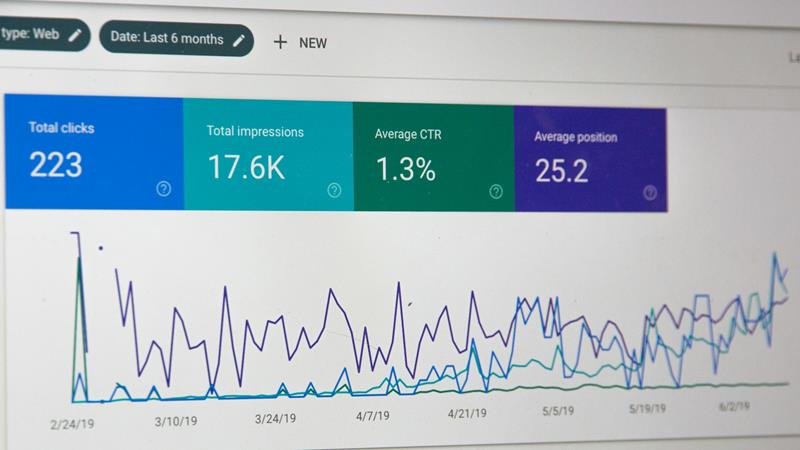
Not directly. Google Analytics can show traffic arriving from ChatGPT, Perplexity and other AI tools, but it can’t tell you how often AI assistants mention or cite your business when people never click through. That’s why AI visibility needs separate measurement.
How often should I check my AI visibility?
Check once to get a baseline, then again 6 to 8 weeks after you make changes to your pages. Checking every week mostly shows the normal run-to-run variation.
Want the full picture without tallying 135 answers? Check your AI visibility for free, or talk to us if you’d like help with what it finds.

Join the discussion
No comments yet.
Leave a Reply