
First-time founders
You have a product idea and potential customers, but no internal engineering team. We act as your product development partner, helping define requirements, design the solution, build the software, and launch the initial release.
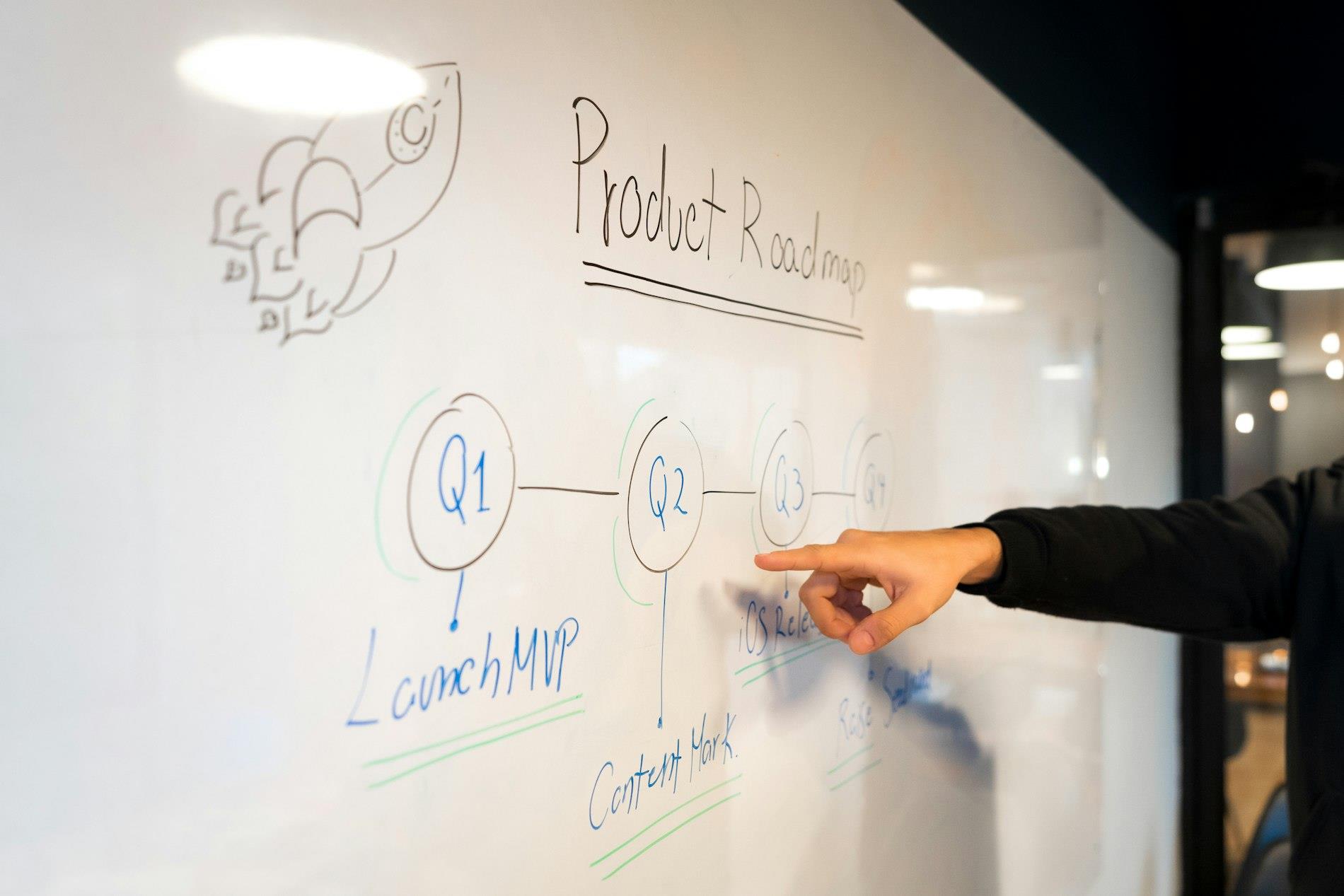
Build the smallest product that validates your idea, launch it to real users, and grow it into a scalable business with the same team.
Startups We've Built For




An MVP (minimum viable product) is the first version of your product that real users can sign in to and use. It solves one core problem well, so you can validate demand and gather real customer feedback before investing in a full-featured product.
You have a product idea and potential customers, but no internal engineering team. We act as your product development partner, helping define requirements, design the solution, build the software, and launch the initial release.

You need to launch quickly, demonstrate traction, or hit investor milestones before building a larger internal engineering team. We can build the initial product, then either transition knowledge to your team or continue supporting development as you scale.

You're launching a new product, service, or business unit and need dedicated development resources without distracting your internal IT team. We've helped organizations such as MadDog Technology build software for new venture initiatives.

Sometimes the first development partner is not the right fit. We've worked with founders who came to us after months of missed deadlines, poor communication, or little visible progress. Kibage engaged SharpQuest after two vendors produced little beyond a login screen over six months. OnTheClock turned to us after a .NET MAUI migration had stalled for more than a year, and we completed the migration in six weeks.
They answer different questions. Many founders need a prototype first and an MVP second; some need only one of them.
| Item | Prototype | Proof of concept (POC) | MVP |
|---|---|---|---|
| Question it answers | Do users understand it and want it? | Can it be built at all? | Will real users adopt it, and is there a viable business in it? |
| What it is | Clickable screens, no working code | A small technical test of the riskiest part | A working product with real sign-in and real data |
| Who sees it | Test users and investors | Your team | Your first customers |
| What you keep | The design, reused in the build | What you learned about the approach | The product, which keeps growing |
Not sure which you need? Our discovery workshop starts with wireframes of the main screens, so you get a clickable prototype as part of the MVP scope.
The hardest part of an MVP is deciding what to leave out. A common mistake is trying to build version three before releasing version one. We help you cut the first release down to what proves the idea.
The MVP Budget Guide and Scope Template walks you through this cut, feature by feature. Get the MVP Budget Guide →
Our MVP development services follow five steps, with working software you can see, test and give feedback on every two weeks.
A scope workshop on your users, the core workflow and what's out of scope. You get a requirements document or an in-scope / out-of-scope list, an estimate and a high-level plan. Small projects get an estimate within 5 business days of a written scope.
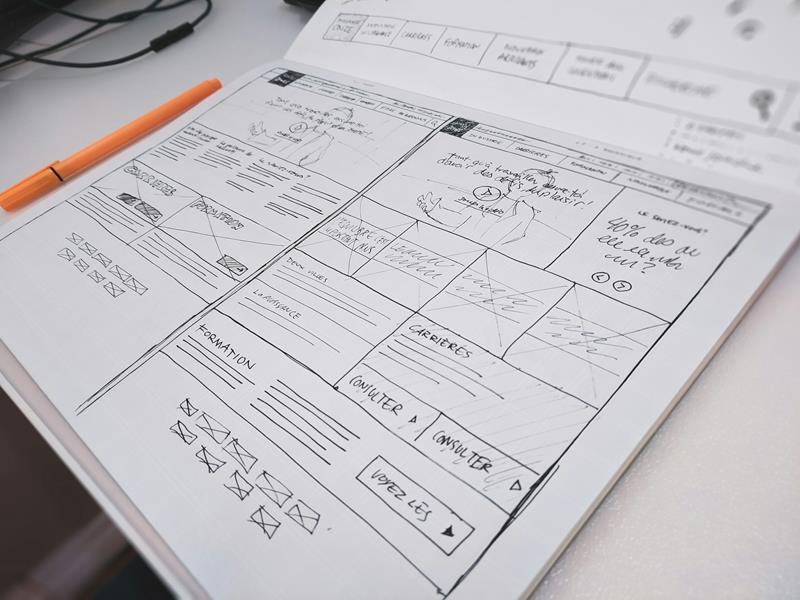
Wireframes of the main screens before any code, so you can test the flow with users or show it to investors.
Two-week sprints with a demo at the end of each one. You see working software early and can change priorities between sprints.
Separate development, QA and production environments, monitoring and backups, and the documentation your contract covers.
We look at what users do, agree the next release with you, and keep building in sprints.
AI-assisted development: we use AI-assisted development tools where appropriate to speed up coding, testing and documentation, so more of your budget goes into business functionality. Our developers stay responsible for the design, code review and testing.
Most MVPs we build start at around $30,000 and take 2-4 months to the first release. We give you a free estimate from a written scope; you don't need to share a budget.
Many founders come to us because they don't yet have the people or technical expertise to design, build and support a software product. We provide the product thinking, architecture, development, QA and project leadership needed to reach launch.
| Item | How it affects the cost |
|---|---|
| User roles | Each role (customer, staff, admin, partner) adds screens and permissions. |
| Platforms | The more platforms (web, mobile or specialized devices) you want to target, the higher the initial cost. |
| Integrations | Payments, maps, messaging, a partner's API or other third-party APIs. |
| Compliance | The more compliance requirements we have to cover, such as HIPAA, the higher the cost. |
| Data | If the data isn't readily available, collecting and compiling it takes time. The more data sources, the higher the cost. |
The consultation and estimate are free. For larger or more complex products we recommend a paid discovery phase, from $8,000, with no obligation to continue.
What an MVP really costs, a first-year budget split, a founder's budget checklist, and a Word template to scope your MVP.
Tick every statement that's true today.
Your score
8-10: You're ready to scope it. The template turns your notes into something a developer can price.
4-7: Close. The gaps on this list are usually the cheapest ones to close.
0-3: Validation comes first: talking to customers and showing them a clickable prototype costs far less than code.
The full PDF covers what to do next. We'll email it to you.
Startup software development we've helped take from idea, prototype or a stalled first build to launch.


Founder · Hygieia
Founder · Kibage
CEO · CoreSRM
An MVP is the beginning of your product journey, not the end of the project. The team that built the MVP can continue helping you improve, scale, support, and expand the product as your business grows.
Once you've gathered feedback from real users, we help prioritize and build the next set of features that provide the most business value.
As usage grows, we help your product handle more users, more data, and more business demands through infrastructure and application improvements.
Start with a web application, then expand to iOS and Android apps when the business case supports it.
If you build your own internal engineering team, we provide documentation and transition support as defined in your agreement.
Some founders continue working with us for years after launch. Others use us until they build an internal team. We support either approach and can scale our involvement up or down as your product and business evolve.
We offer support plans to keep your product up to date with ongoing cloud updates and tool upgrades.
| Essential | Professional | Premium | |
|---|---|---|---|
| Hours per month | 10 | 20 | 40 |
| Response time | Within 2 business days | Next business day, priority | Same day in business hours, highest priority |
| Covers | Bug fixes, minor configuration, security and maintenance updates, email support | Plus minor enhancements, application maintenance and a monthly review | Plus account oversight, monthly meetings and roadmap guidance |
| Price |
Hygieia engaged us for ongoing improvements and product support, and some clients have trusted us for more than eight years.
Based in Troy, Michigan, SharpQuest has helped startups and growth-stage companies design, build, and launch software products since 2009. We combine experienced product developers, transparent communication, and practical startup thinking to help founders get to market faster.
Work directly with senior developers and project leaders who have built applications for healthcare, workforce management, AgeTech, SaaS, and other growing businesses.
The people building your MVP are SharpQuest employees, providing consistent communication, accountability, and knowledge retention throughout the project.
We're happy to sign your NDA, or provide ours, before discussing your product concept, business model, or market opportunity.
See working software every two weeks through regular demos and reviews, so you're validating ideas continuously instead of waiting months for results.
We use separate environments, monitoring, backups, and documentation so your first release can evolve into a production application instead of being rebuilt from scratch.
We've worked with founders, venture operator businesses, and new ventures that needed to launch quickly while balancing limited budgets, evolving requirements, and investor expectations.
SharpQuest carries professional liability (E&O) insurance, giving clients additional protection and confidence when investing in software development.
Comparing development partners for your MVP? See the questions to ask before you sign →
We use proven technologies trusted by startups and enterprises alike, helping you avoid unnecessary technical risk while keeping future hiring and scaling options open.
Web

.NET

C#
ASP.NET Core Web API

Angular

React
Mobile

.NET MAUI

React Native
Cloud

Microsoft Azure

AWS
Data

SQL Server
Azure SQL
AI

OpenAI
Azure OpenAI
Integrations

REST APIs
GraphQL

Legacy APIs & Web Services
Building the first working version of a product: the smallest release that real users can sign in to and use, so you can test demand before building everything else. It's different from a prototype (clickable screens) or a proof of concept (a technical test).
Most MVPs we build start at around $30,000. The cost depends on the number of user roles, how many platforms you target, integrations, compliance requirements such as HIPAA, and how much data has to be collected. We give you a free estimate from a written scope, and you don't need to share a budget.
Usually 2-4 months to the first release. Small projects get an estimate within 5 business days of a written scope, and you see working software at the end of every two-week sprint.
A prototype is clickable screens with no working code, to test whether users understand and want the idea. A proof of concept tests whether the riskiest technical part can be built. An MVP is a working product with real sign-in and data, for your first customers.
The one workflow that delivers your core value, sign-in and roles, an admin area, one integration that matters, and security, backups and monitoring. Second platforms, advanced dashboards and most "nice to haves" can wait for the next release. Our MVP Budget Guide and Scope Template helps you make that cut.
Web is usually the fastest way to reach users and test the idea. If your users need an app store app, we build cross-platform iOS and Android apps with .NET MAUI or React Native, so one codebase covers both. That's usually the fastest route for startup app development.
Yes. We use AI-assisted development tools where appropriate to speed up coding, testing and documentation, so more of your budget goes into business functionality. Our developers stay responsible for the design, code review and testing of everything we deliver.
Yes. We sign HIPAA Business Associate Agreements and build with role-based access, encryption and audit logging. Hygieia, a healthcare startup, uses the physician portal we built for it.
Yes. We review the existing code first and tell you what's worth keeping. Kibage came to us after two vendors delivered only a login screen in six months, and we finished OnTheClock's .NET MAUI migration in 6 weeks after another vendor's year.
We continue developing other features to enhance your product, or support it under a monthly plan of 10, 20 or 40 hours. If you hire your own team, we hand over the code and documentation as set out in your contract.
No. Many founders come to us with an idea, notes, sketches or conversations with potential customers. Our discovery process turns those into a practical MVP scope and estimate.
Ownership of the source code and intellectual property is set out in your contract with us. We agree on it before work starts, so you know exactly what you will own. At handover you get the source code, documentation and environment access your contract covers.
Yes, we sign your NDA, or use our mutual NDA, before you share project details.
Have a question we didn't answer?

Building your first app? The costs founders miss beyond development: MVP scope, legal, app stores, cloud, AI usage, maintenance and the budget to launch.
A plain-English glossary for non-technical founders: MVP, sprints, APIs, UAT, cloud, security and AI terms, and what to ask a software vendor about each one.
Tell us about your idea and we'll help you define a first release: what to build now, what can wait, and what it would cost.
We respond within two business days.
Tell us what you want to build and we'll set up a free consultation.
We respond within two business days.
Our team will review it and get back to you within 2 business days.
Prefer to pick a time? Book a call with us
Need to talk sooner? Call us at (248) 268-2592 during Eastern Time business hours.